
In April 2025, Mimer AI Factory started taking clients as Sweden’s AI innovation factory. The premise was straightforward: access to serious AI infrastructure shouldn’t depend on the size of your organisation’s budget or headcount.
One year in, more than 200 organisations have connected with Mimer. While the numbers are impressive, the results are where Mimer AI Factory really shines: a gaming studio fine-tuning a model it couldn’t have trained alone; researchers reducing their reliance on manual data labelling, a life science company finding its footing between AI ambition and regulatory reality; a public agency learning to ask the right questions.
Building something from scratch
Mimer AI now numbers more than 70 employees – AI specialists, HPC engineers, sector consultants, data scientists, communicators, and generalists. All hired, oriented, and working with clients inside a single year.
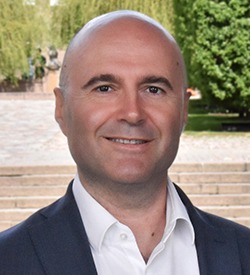
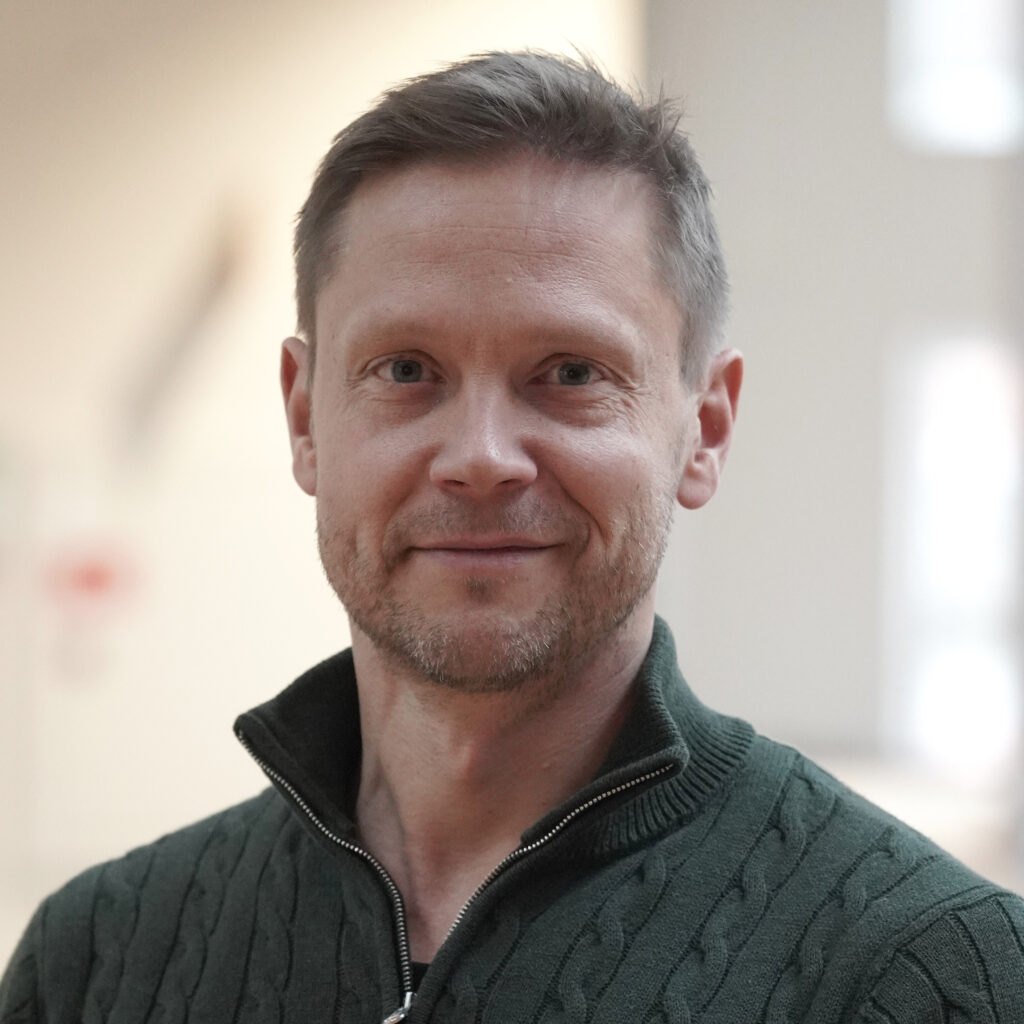
Director Rossen Apostolov and Deputy Director Thor Wikfeldt have built Mimer around a simple idea: that accessing EuroHPC’s infrastructure should be straightforward, and that the expertise to use it well shouldn’t only be available to big enterprises. The team draws on domain expertise, spans four industrial focus areas, and covers several secondary areas, meeting clients needs wherever they are on their AI adoption journey.
Our focus areas
Life science is one of the more developed areas for Mimer AI Factory. Sweden’s sector — over 3,800 companies, roughly a tenth of national exports — is under real competitive pressure, and Mimer’s eight-person team has leaned into that urgency. More than 60 academic and industrial projects are active; four are already complete. Early partnerships with SwedenBio, NBIS, and SciLifeLab have already produced three new projects through introductions alone. The work spans medical imaging, drug discovery, treatment planning, and production-line optimisation.
Autonomous systems contributed to a Vinnova-funded project with Zenseact, Scaleout, AI Sweden, and RISE – one that tackles one of the stubborn bottlenecks in AV development: dependence on manually labelled training data. Mimer’s GPU infrastructure ran large-scale simulations across self-supervised learning, knowledge distillation, and federated learning. A second project with vehicle safety researchers at Chalmers is working on automated crash prediction, fusing spatio-temporal data to map time-dependent road risk across the Gothenburg area.
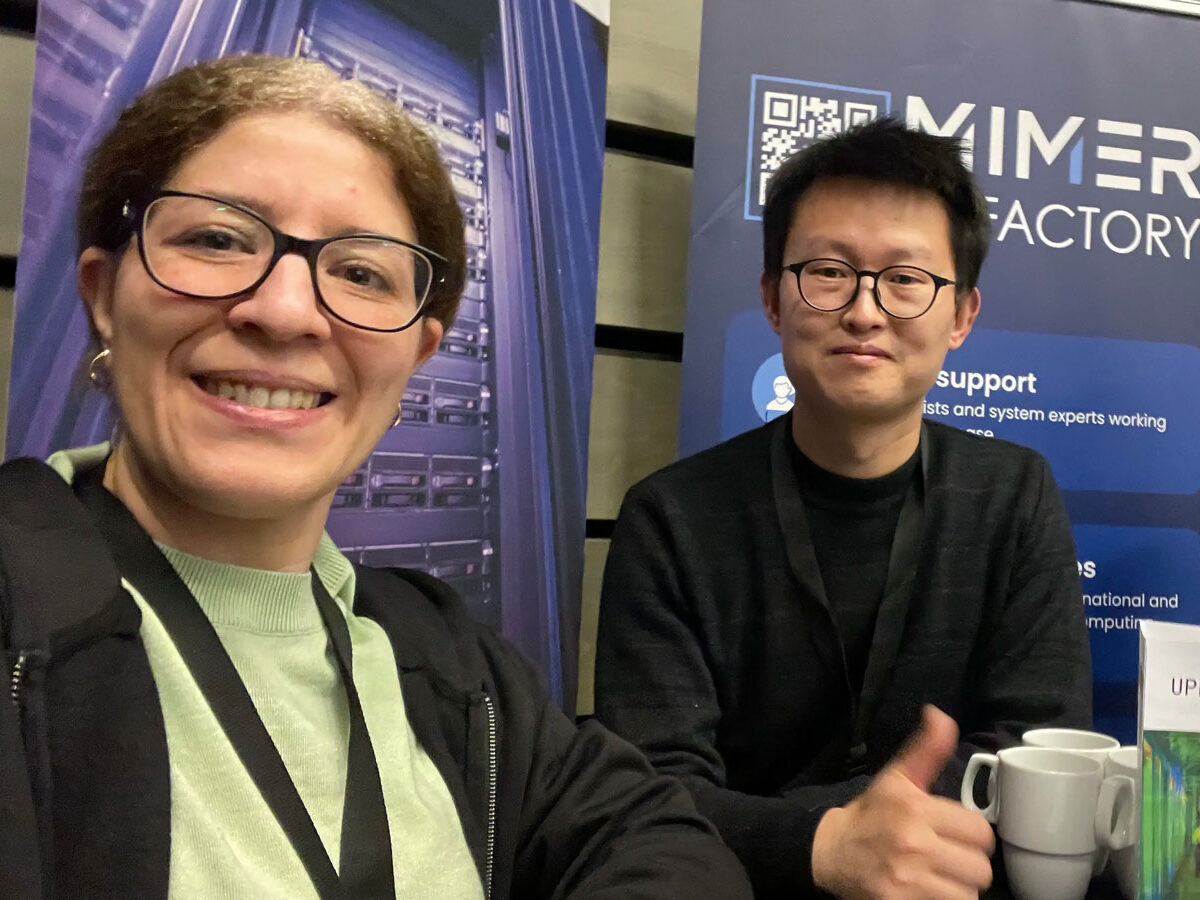
Materials science operates in a sector that’s genuinely curious about AI, but often not quite ready. The recurring problem isn’t interest – it’s data. High-quality structured data is scarce, and much of what exists is buried in unstructured literature that even good extraction tools struggle with. The team has 39 active deals, 21 in scoping or execution. Live work includes collaboration with MAX IV on an agentic AI assistant for experimental guidance, X-ray image analysis for artefact detection, and physics-informed neural networks for CFD in automotive.
Gaming moves at the pace you’d expect. Sweden has thousands of game SMEs competing globally, many of them needing AI capability they don’t have the budget or bandwidth to build in-house. More than 50 companies are in the pipeline, from solo developers to studios with hundreds of staff. NPC behavioural models, physical movement optimisation, and model fine-tuning are the common requests. The team has also extended its scope to the broader cultural and creative industries, a natural fit given its background in visualisation and cultural production.
Infrastructure you can actually use
Compute access is only valuable if you know what to do with it. Mimer’s tech and tools team has spent the year solving for that: helping organisations apply for compute allocations, guiding them through AI workflows and containerisation, and providing hands-on support for RAG pipelines, agentic systems, LLM fine-tuning, and large-scale data management.
The data team — now 11 strong — covers data management, security, privacy, policy, and AI development. Among its active contributions is the WIFORCE initiative, where Mimer is structuring data services with potential to run modelling tasks for industrial partners as the collaboration grows.
Trustworthy AI has been one of the quieter but more consequential parts of the year’s work. Syndata AB came wanting to evaluate the privacy of their synthetic data generator against GDPR and the AI Act. Mimer walked their engineers through the process, quantified the results, and left them able to run the evaluation themselves. Applied AI Sweden came with a different problem: how to assess the ethics readiness of an agentic AI application for elderly care. Mimer’s evaluation produced an exit report the company can build from. In both cases, the measure of success was the same: the organisation left more capable, not more dependent.
Learning, in public
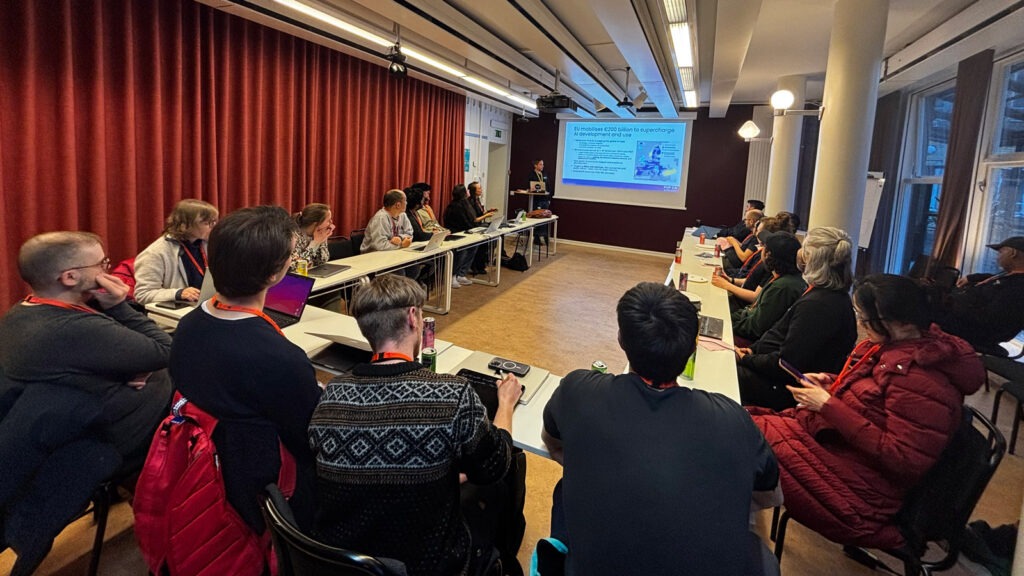
Mimer AI Factory’s training programme reached roughly 340 unique learners across around 170 affiliations in its first year — through seven webinars, one course, one workshop, and one hackathon. At least a third of participants identified as female or non-binary. The sector breakdown is wide: 65% academia, 14% public sector, 11% SMEs, 6% large companies.
Participants noted that the sessions felt genuinely structured — not just content-heavy — and that the co-teaching format held attention in ways a single presenter rarely does. That’s not accidental. Events are built with dry runs, clear learning outcomes, and enough interactivity to make two hours feel different from a lecture.
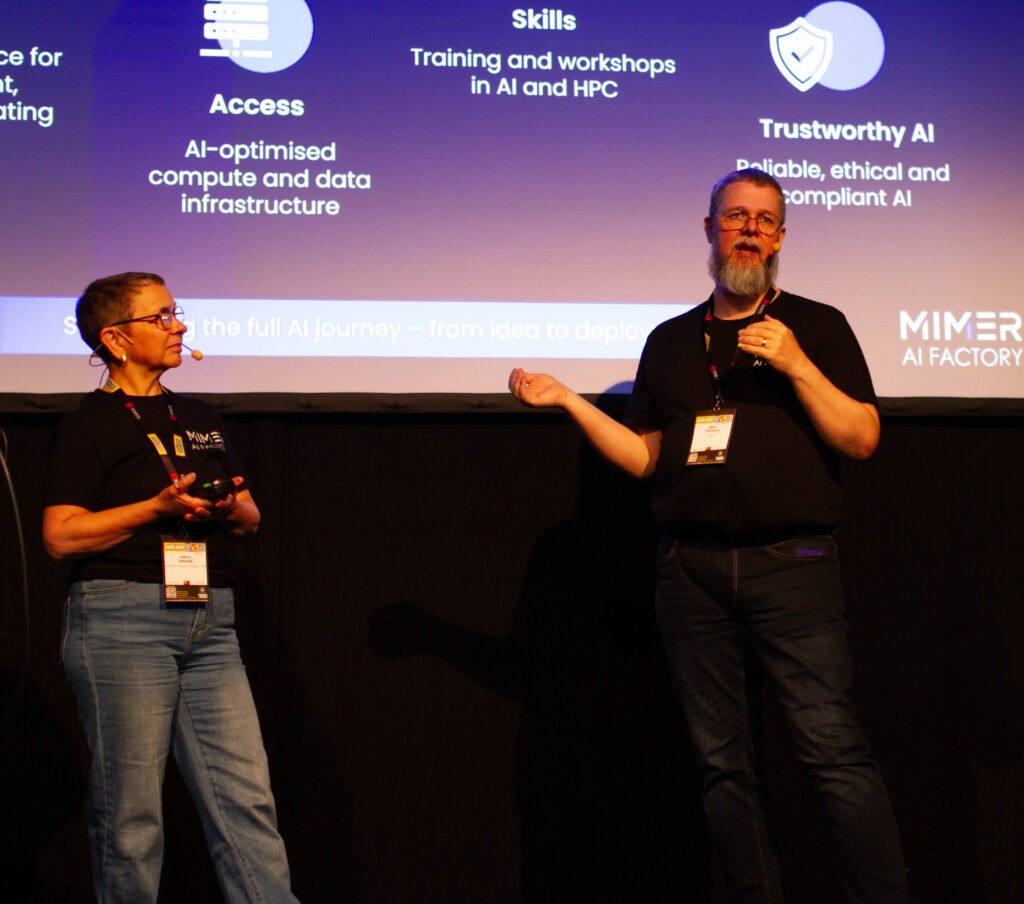
Mimer AI Factory has had a stage presence at Stockholm Tech Show, Techarena, and the Data Innovation Summit. In gaming, appearances at both Umeå Game Conference and Sweden Game Conference put the AI factory concept in front of an industry audience that doesn’t always picture EuroHPC infrastructure as something relevant to them. It is.
What our first year means
Mimer AI Factory has spent twelve months showcasing that demand exists. More than 200 organisations don’t end up in your pipeline on accident – they show up because there’s a real gap in the market for expert AI support without a commercial agenda attached.
The challenge now is throughput: deepening existing work, formalising support structures, and continuing to expand the compute infrastructure that makes everything else possible. Recruitment is ongoing. Workshops and training are in planning. Partnerships are maturing.
Sweden’s AI ambitions are substantial. Mimer AI Factory’s job is to make sure those ambitions don’t stall at compute access, missing expertise, or a regulatory framework no one has time to decode. That work is ongoing. But the first year has made one thing clear: it can be done.